interactive-tui
Streaming terminal interface
Responses arrive live inside a focused TUI, so planning, tool calls, and code edits remain visible without leaving the shell.
A coding agent living inside your terminal: interactive TUI, persistent conversation memory, headless automation, remote sandboxes, custom skills, and human approval for every dangerous move.
MNEMS wraps model reasoning around the real workflow surface developers already trust: the terminal. It streams, edits, remembers, resumes, and can run without a human screen when CI needs an agent.
Responses arrive live inside a focused TUI, so planning, tool calls, and code edits remain visible without leaving the shell.
Thread state survives sessions, letting developers reopen work exactly where the agent left off.
Non-interactive runs make MNEMS useful in scripts, pipelines, release checks, and scheduled maintenance.
Teams can define reusable skills for repo conventions, deployment recipes, code review rituals, and domain tools.
Tool calls can be reviewed, approved, or rejected before execution, keeping power and control in the same frame.
Connect isolated environments such as LangSmith, AgentCore, Daytona, Modal, or Runloop for safer execution.
The videos become monitored signal feeds: agent wake state, memory recursion, and daemon pulse. They add cinematic energy without breaking the terminal-native product story.
MNEMS treats the command line as the cockpit: readable state, explicit approvals, inspectable logs, and direct handoff between human intent and LLM tool calling.
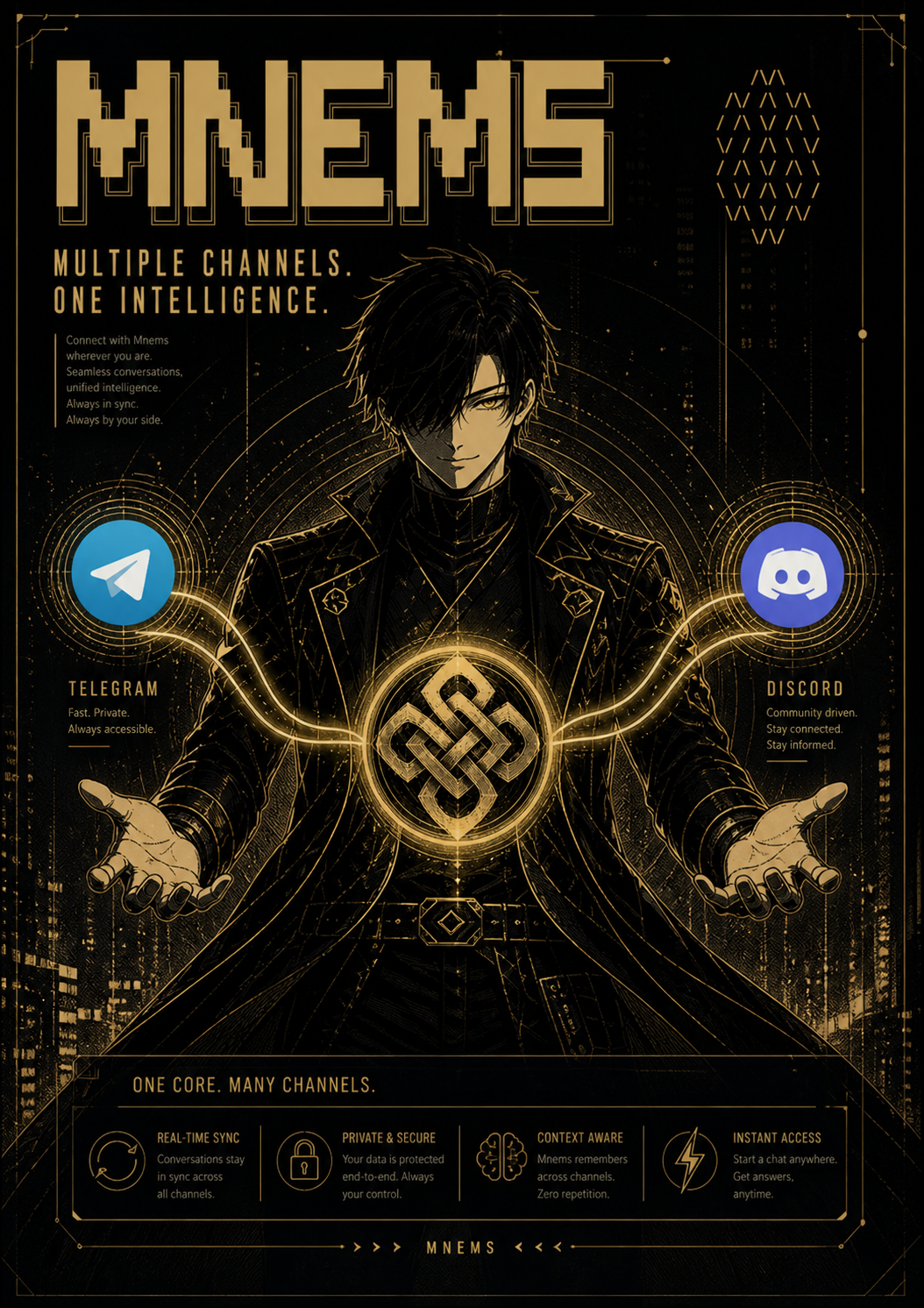
A background daemon coordinates channel adapters, probes health, persists status locally, and gives developers a fast operational view from the CLI.
MNEMS can delegate risky code execution into remote sandboxes while preserving human approval gates for local tool calls.
The developer asks MNEMS to investigate, patch, test, or automate inside the current repo.
The agent chooses local terminal work, a remote sandbox, or a channel adapter based on the task boundary.
Destructive or privileged tool calls pause for review, giving the operator a clear accept or reject moment.
Conversation state is saved, so the same thread can continue after a terminal restart or a later shift.

Conversation resume keeps the agent from becoming a disposable prompt box. It can pick up an interrupted investigation with the same thread context.
Custom skills turn repeated work into reusable operating procedures: review style, deploy sequence, log triage, migration rules, and more.
SQLite persistence means adapter health and logs are available immediately from the CLI, even when channels are retrying.
MNEMS can act, but sensitive operations remain inspectable. Approve, reject, or ask for a diff before the agent proceeds.